Novotel Tallinn at Poordi 5: Estonia’s First LEED-Certified Hospitality Property
A hotel is not just a place where people sleep anymore.
For many guests, especially business travelers and long-stay visitors, a hotel can become a temporary home. People may stay for several nights, several weeks, or even months. They work there, rest there, recover after meetings, call their families, cook, read, sleep, and start their next morning there.
When a building plays such an important role in everyday life, expectations naturally change. Guests pay attention not only to service and location, but also to comfort, indoor climate, reliability, and the overall quality of the environment around them. In many ways, the standards people expect from a hotel begin to resemble those they expect from the places where they live and work.
So the question is simple: if we expect high standards from residential and office buildings, why should a hotel be different?
This was one of the ideas behind Novotel Tallinn at Poordi 5 — a hotel building designed not only to look good on opening day, but to perform well for years.
Estonia’s First LEED-Certified Hospitality Property
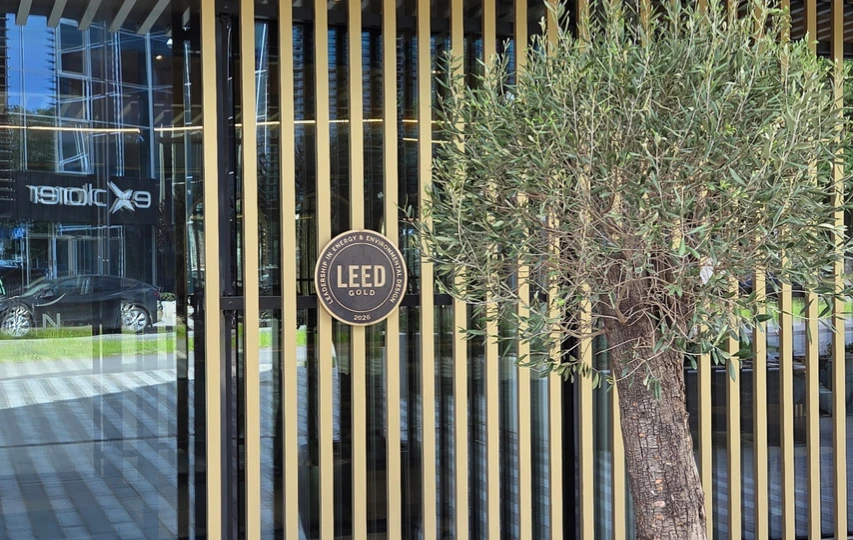
Novotel Tallinn has become Estonia’s first LEED-certified hospitality property. For Estmak, this is an important milestone but also a natural continuation of our approach to development.
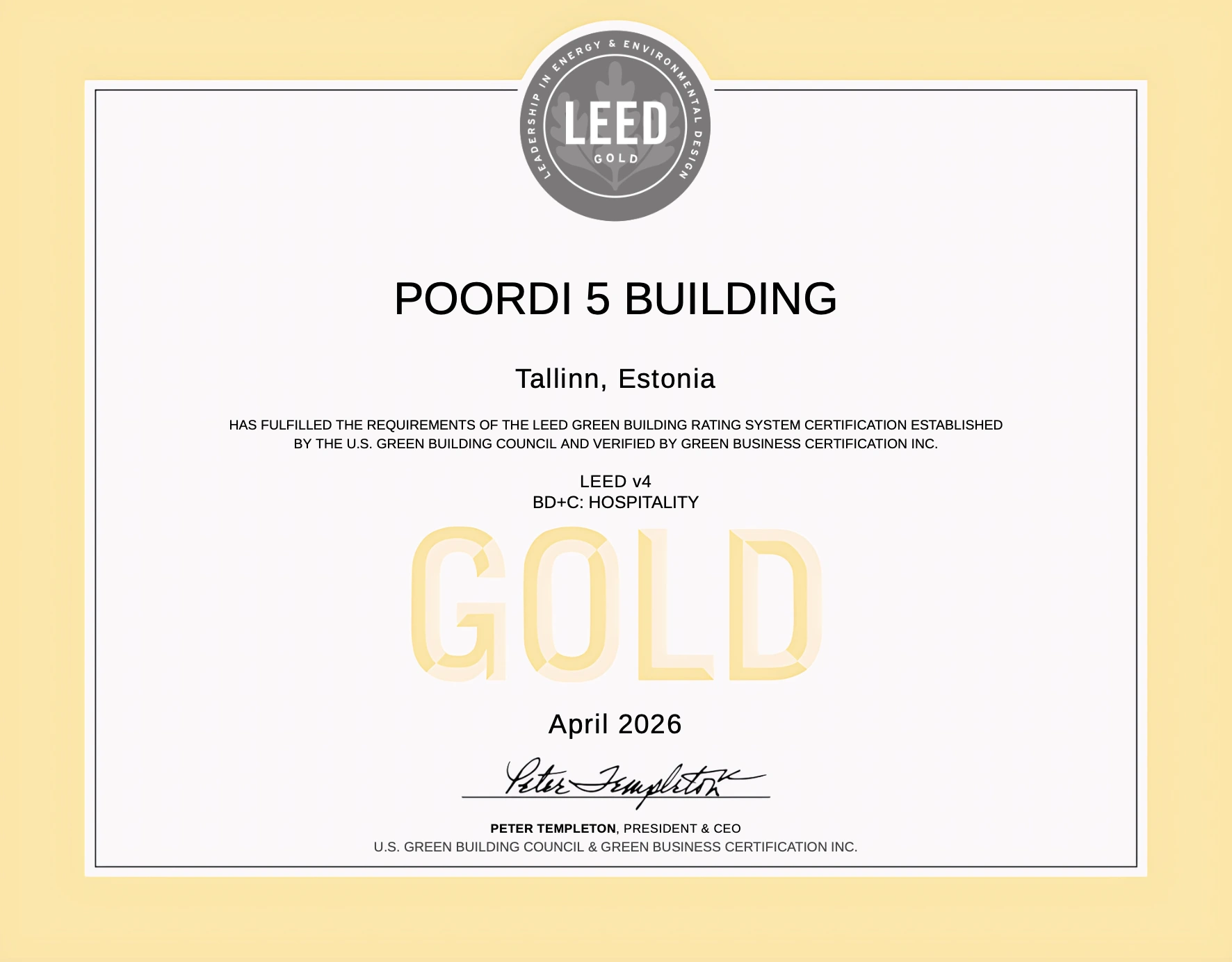
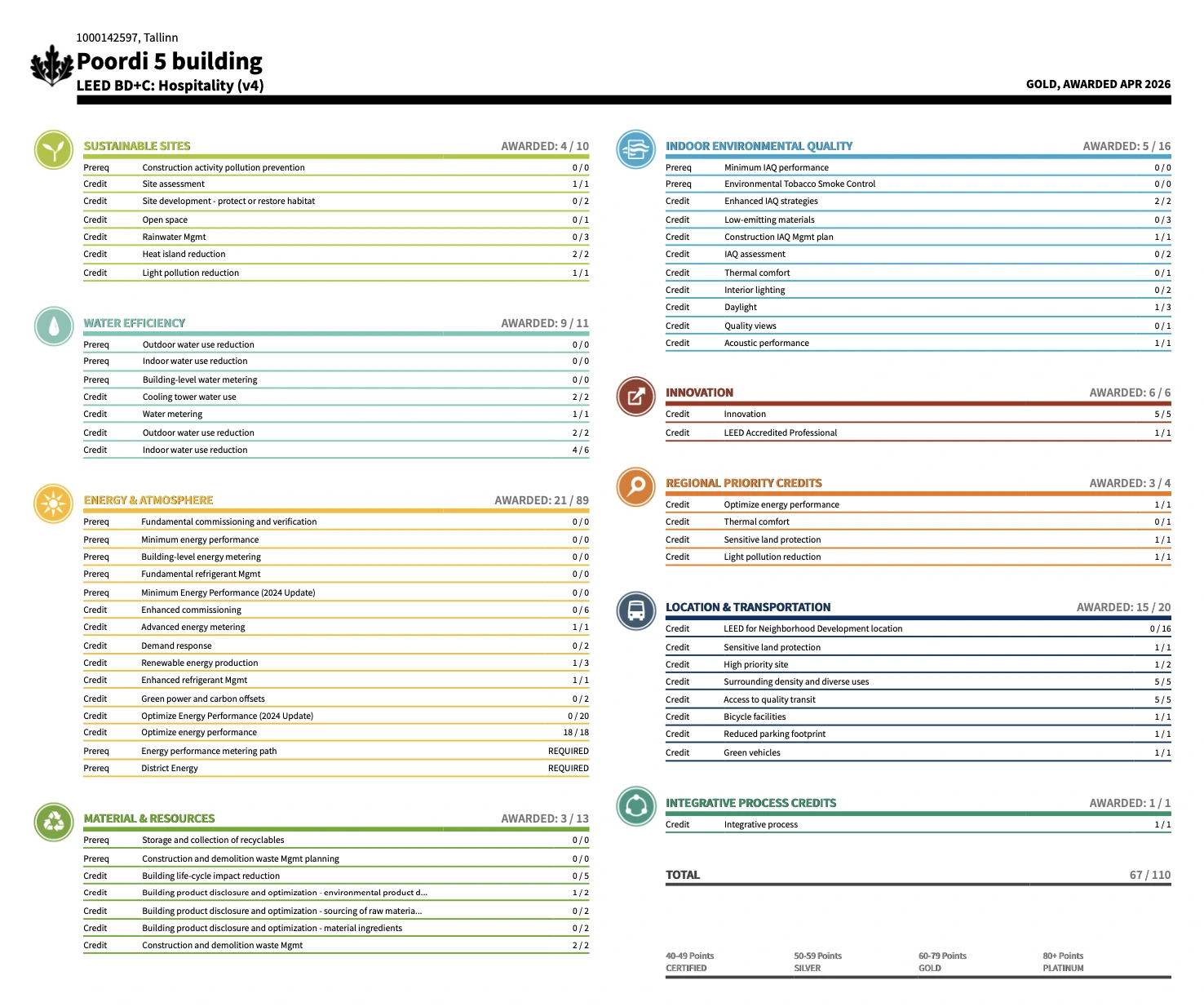
Sustainability is not a separate feature added at the end of a project. It is part of how we design, build and think about the long-term life of our buildings.
Poordi 5 is not the first certified building in Estmak’s portfolio. The Explorer office building at Kai 1 in Tallinn received the LEED Platinum certification in 2016 and became the first office building in Estonia to achieve this level. More recently, the Versum stock-office complex in Riga was awarded the BREEAM “Good” certification.
LEED Gold for Novotel Tallinn is therefore not a one-time achievement. It is a logical next step in Estmak’s long-term approach to energy-efficient and future-ready buildings.
Not Only a Hotel Room, but a Temporary Home
What makes Novotel Tallinn special is its approach to hospitality.
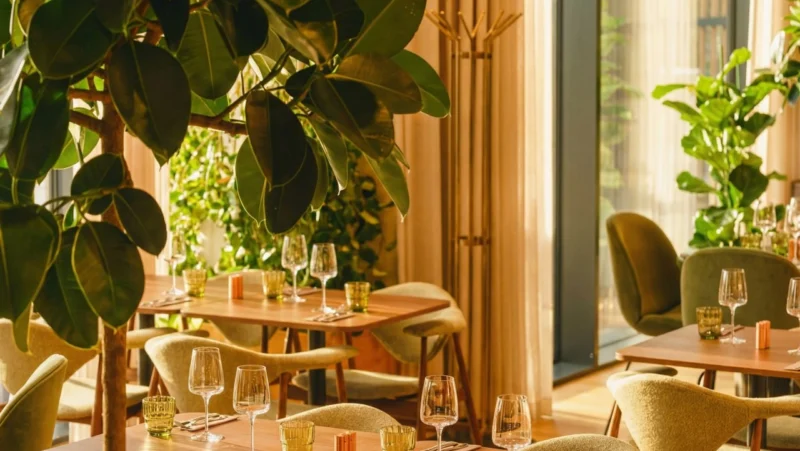
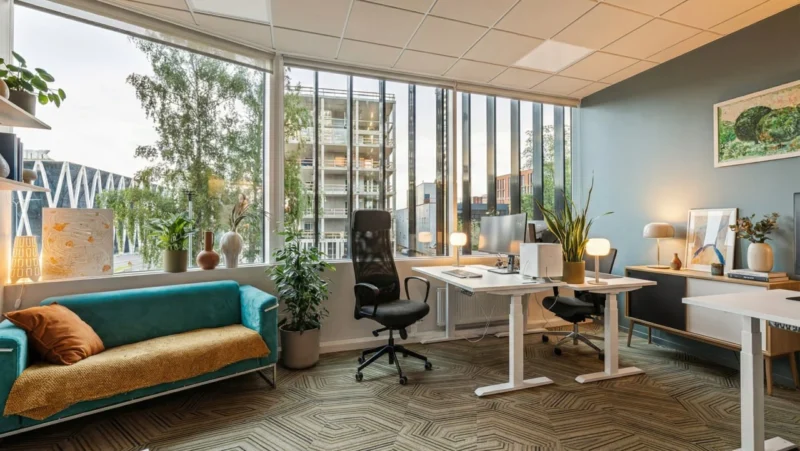
The building includes both hotel rooms and apartments for longer stays. This changes the way the building has to work. For a guest staying one night, location, service and design are important. For a guest staying several weeks, the building itself becomes part of everyday life.
Indoor climate, air quality, heating, cooling, acoustics, water use, and reliability are no longer invisible technical details. They become part of comfort.
This is especially relevant for corporate clients. When companies send employees to another country, they want to know that the hotel is not only well located, but also safe, comfortable, efficient, and built to a high international standard.
LEED Gold provides this confidence in a simple, recognizable way.
The Systems Guests Do Not See, but Feel Every Day
A good building should not constantly remind you how technically advanced it is. It should simply work.
At Novotel Tallinn, many important systems operate quietly in the background: solar panels, geothermal piles for heating, heat recovery ventilation, energy-efficient floor heating, modern cooling systems, and water-saving sanitary appliances.
These are not decorative “green” features. They are practical engineering solutions that help the building use energy and water more efficiently every day.
The hotel also uses a diesel-free backup power system based on battery storage. Instead of a traditional diesel generator, the system starts instantly during power interruptions and supports critical systems, such as fire safety and key engineering equipment.
For guests, this may never become visible. And that is the point. Reliability, safety, and comfort should work in the background without interrupting the hotel experience.
Sustainability Should Feel Like Comfort
For many people, sustainability still sounds like a technical topic. Certificates, standards, systems, audits.
But inside a hotel, sustainability should feel much simpler. It should feel like comfort.
It is the air in the room. The stable temperature. The feeling that the building is quiet and reliable. The sense that everything works without effort.
Material choices and indoor climate systems also played a significant role in the project. The focus was on responsible material choices, proper management of construction waste, and technical solutions that support a stable indoor environment.
These may not be the most visible parts of the building for guests, but they strongly influence how the building feels — the air, temperature and overall quality of the stay.
Why It Matters for the Hotel Market
In today’s hotel market, location and design are no longer enough to stand out.
Travelers increasingly look at how responsibly a hotel is built and operated. Corporate clients care where their employees stay. International partners often expect clear sustainability standards, not just general promises.
For Novotel Tallinn, LEED Gold strengthens the hotel’s position among international guests, corporate clients and long-stay residents. It shows that the building was developed with efficiency, comfort, and long-term performance in mind.
Sustainability work also continues during hotel operations, as Novotel Tallinn has received the Green Key certificate.
Together, these certifications send a clear message: this is not just a new hotel in a good location. This building was developed in accordance with recognized international standards.
A Higher Benchmark for Estonia
Hotels have operated every day for decades. That means decisions made during design and construction have a long-term impact on guests, operators, the city, and the environment.
Novotel Tallinn shows that Estonia can deliver hospitality projects at this international level.
For Estmak Capital, the goal was not only to complete another development project. The goal was to bring the same quality-driven, energy-efficient approach we use in residential, office, and mixed-use developments to the hospitality sector.
And if this raises expectations for future hotel developments in Estonia, that is a good thing.
Because a modern hotel should do more than welcome guests.
It should make them feel they are staying in a building designed for their comfort, safety, and the city’s future.
Other News